
1. Introduction
voraus robotik is a deep-tech company from Hanover with a wealth of experience spanning several decades of robotics research, development and productization. The team combines its expertise in robotics, automation and artificial intelligence with modern software development practices such as continuous integration.
voraus robotik enables independent production automation by breaking dependencies and vendor lock-ins - allowing flexible integration of new technologies and continuous efficiency improvements. Open interfaces and a containerized component architecture ensure digital sovereignty and reduce dependency on individual suppliers.
Industrial DevOps
Industrial automation is subject to ever-shorter cycles of changing requirements - from product variety and individualization to normative regulations such as the Cyber Resilience Act (CRA) and the increasing demand for digital sovereignty. The traditional approach with proprietary, incompatible programming languages and tools leads to high costs, long project durations and limited test coverage.
voraus robotik transfers the proven DevOps approach from IT to the world of industrial automation: Industrial DevOps. By programming all components of an automation cell in a high-level language (e.g., Python) without sacrificing real-time capability, and by virtualizing these components for simulation and testing, fast development cycles with high quality become reality in the OT domain. The result is a consistent, modern and powerful toolchain - without vendor lock-in and without cloud dependency.
Industrial AI
Building on the Industrial DevOps approach, voraus robotik integrates artificial intelligence directly into the automation workflow. High-level language programming and standardized interfaces allow using AI agents and generative AI tools for code optimization, automated test generation and runtime parameter tuning.
The unified code base between simulation and real systems ensures that AI-generated or AI-optimized code can be thoroughly tested before deployment - a critical requirement for industrial-grade reliability.
1.1. About this Documentation
This documentation serves as the overarching manual for the voraus software ecosystem. It covers the core concepts, installation, configuration and operation of the voraus software products. In addition, the voraus.core Components and voraus.pioneer Components chapters link to dedicated documentation for individual components such as the EtherCAT Master, Simulation, 3D Visualization, and more.
For a high-level view of how all platform components fit together, see Architecture Overview.
For detailed information on the individual products, refer to the respective chapters:
voraus.core - The real-time middleware platform
voraus.pioneer - The development and simulation environment
1.2. Product Families
1.2.1. voraus.core
The voraus.core is the real-time capable platform that orchestrates complete automation cells. It enables the programming of all components - robots, grippers, cameras, conveyors or single-axis and multi-axis drives - in a high-level language while maintaining full real-time performance equivalent to a PLC.
Key characteristics:
Hardware agnostic: Supports various robot types from cobots to industrial robots, connected via industry standards such as EtherCAT, PROFINET and OPC UA.
Open API: A Python and OPC UA interface ensures flexible expansion from driver level to top-level integration with HMI, ERP or cloud services.
Containerized architecture: Modular, microservice-based design enables fast software updates - reducing update times from 60 minutes to under 5 minutes per system.
IT-OT convergence: Makes the real-time field and controller level of the automation pyramid IT-capable, enabling data flow across all layers and opening the door for big data and AI applications.
No vendor lock-in: Users retain full control over tool selection, data and deployment - on-premise or in the cloud.
The voraus.core represents the operations side (right half) of the Industrial DevOps cycle.
For full details, see the voraus.core chapter.
1.2.2. voraus.pioneer
The voraus.pioneer is the development and simulation environment that implements the development side (left half) of the Industrial DevOps cycle, see Fig. 1. It provides modern IT tools, integrations and workflows for efficient programming, testing and deployment of automation solutions.
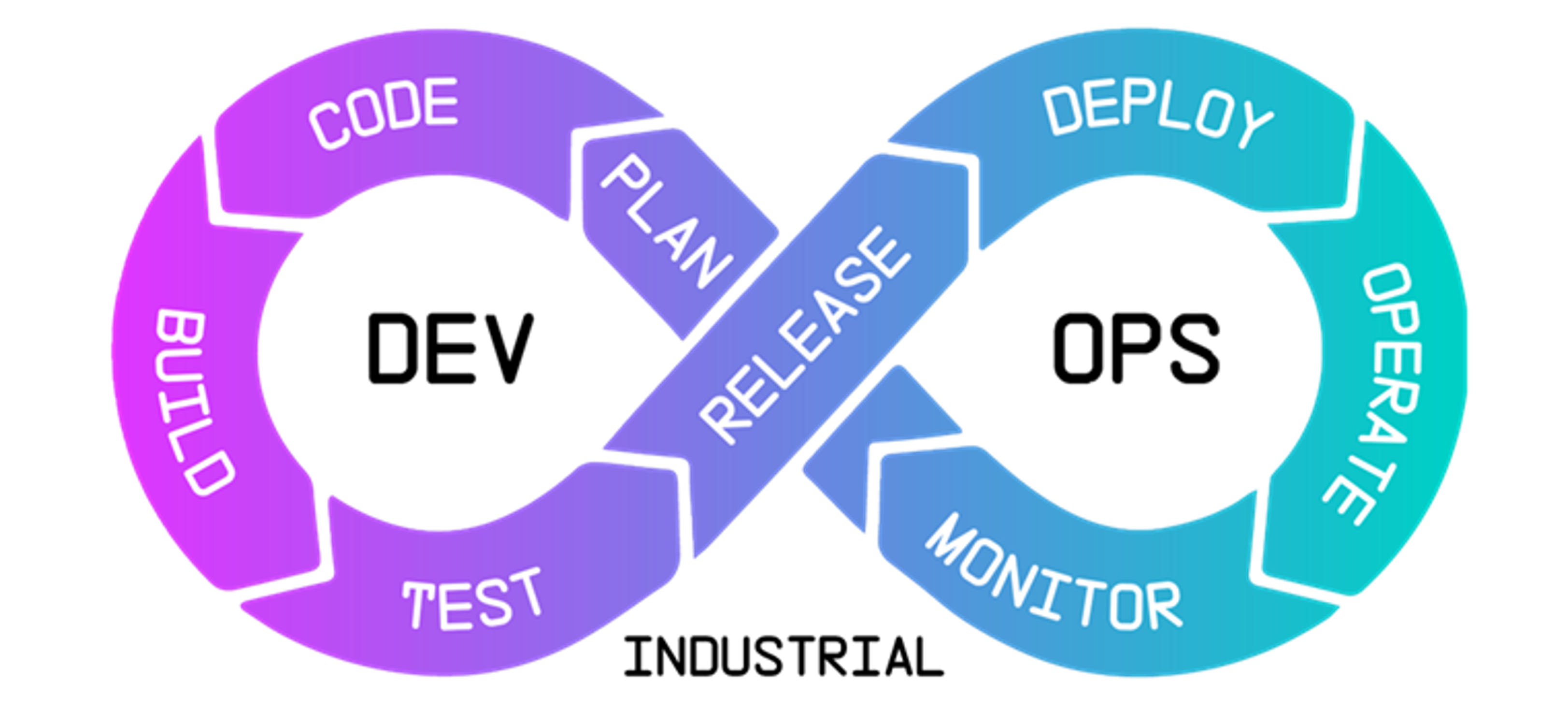
Fig. 1 DevOps – process steps of modern software development
Key characteristics:
Simulation and virtualization: Develop and test the complete application without requiring physical hardware. Virtual components share identical APIs with their real counterparts - no code changes needed for deployment.
High-level language development: Use Python, your preferred IDE and standard software engineering tools (formatting, linting, version control) instead of proprietary robot languages.
Test-driven development: Automated test pipelines achieve over 95 % test coverage, catching errors early and reducing cost of bug fixing by a factor of 40 compared to discovery during commissioning.
AI-ready workflow: Open, IT-standard-based interfaces allow integration of AI agents for code optimization, automated test generation and KPI tuning (e.g., cycle time, reachability).
Short iteration cycles: Optimize, react to changes and deploy software updates with minimal risk.
The combination of voraus.pioneer for development and voraus.core for deployment creates an integrated Industrial DevOps workflow covering the entire software lifecycle of an automation system.
For full details, see the voraus.pioneer chapter.
1.3. Architecture Overview
This section provides a high-level view of the voraus platform as an integrated system - explaining how its components relate, where they run, and which audience each serves.
1.3.1. Platform Components
The voraus platform consists of two main product families and a set of specialized components:
Layer |
Component |
Purpose |
Required / Optional |
|---|---|---|---|
Operations (OT) |
Real-time middleware: motion control, I/O, orchestration, Central platform - runtime, orchestration, APIs, license and update management |
Required |
|
Part of the voraus.core: Motion control, interpolation, fieldbus communication |
Required |
||
Real-time fieldbus master for connecting EtherCAT devices |
Optional |
||
Part of the voraus.core: Graphical web-based HMI for operation, monitoring and no-code programming |
Optional |
||
Bridging voraus.core with ROS ecosystems |
Optional |
||
Development (IT) |
Development & Simulation environment |
Required for development, optional for operation |
|
Virtual automation cell for development and testing without physical hardware |
Optional |
||
Web-based 3D rendering of the automation cell |
Optional |
||
High-level Python library for robot programming |
Optional |
||
Python-level access to EtherCAT process data |
Optional |
||
Vision system integration (Roboception cameras) |
Optional |
1.3.2. Example Configuration
The following diagram illustrates a typical voraus platform deployment:
        %%{init: {'flowchart': {'subGraphTitleMargin': {'top': 5, 'bottom': 20}}} }%%
graph TD
   subgraph voraus.pioneer - Developer Workstation
      sim[voraus Simulation]
      visu[voraus 3D Visu]
      arm_py[voraus Robot Arm]
      ecat_py[voraus EtherCAT Python Client]
      sdk[Python Application]
      sim --> sdk
      visu --> sdk
      arm_py --> sdk
      ecat_py --> sdk
   end

   sdk --->|OPC UA| core

   subgraph Industrial PC - IPC
      core[voraus.core<br>Runtime]
      rc[voraus Robot Control]
      ecat[EtherCAT Master]
      operator[voraus.operator<br>Web HMI]
      core --> rc
      core --> ecat
      core --> operator
   end

   rc --> robot[Robot<br>Industrial Robot / Cobot]
   ecat --> peripherals[Peripherals<br>Drives, I/O, Conveyors, Grippers, Cameras]
The diagram shows the two main deployment layers of the voraus platform. On the developer’s workstation, voraus.pioneer provides tools such as the voraus Simulation to develop and test Python applications without physical hardware. Once ready, the same application can be deployed against a real voraus.core running on an industrial PC, which orchestrates the automation cell - including robot control, EtherCAT communication, and the web-based operator interface. Both layers communicate via OPC UA.
1.3.3. Typical Deployment
A typical voraus deployment may consist of:
An Industrial PC (IPC) running the voraus.core with drivers and application containers.
A robot (cobot or industrial) connected via EtherCAT or proprietary fieldbus.
Peripherals (grippers, cameras, conveyors) integrated through EtherCAT or I/O.
A browser-based operator interface (voraus.operator) accessible from any device on the network.
A developer workstation with voraus.pioneer for programming and simulation.
Note
Not all components are required for every deployment. A minimal system may consist of only the voraus.core and a single robot. Additional components can be added incrementally as needed.
1.3.4. Where to Go Next
For installation and first setup, see Installation and Configuration.
For the real-time platform, see voraus.core.
For development and simulation tools, see voraus.pioneer and voraus.pioneer Examples
For specific component documentation, see Core Components and Pioneer Components.
For hands-on use cases and examples, see Use Cases and voraus.pioneer Examples.